Warming up from the inside out –

As the Northeast braces for terrible, horrible, no-good, “frozen tundra” weather, I feel a little guilty to be enjoying the unusually warm and dry weather we are having on the Other Coast.  I did spend four years in -3o degree F temperatures, however, so I am not exactly one to run away from the cold.  In fact, cold weather is the best running weather, as far as I’m concerned.

One of the best things about coming in from the cold is the enveloping warmth that greets you when you escape the outside, and finally shed all of your layers.  Even better is a bowl of soup to warm you up from the inside out.  Perhaps it is the memory of my mother’s comforting soups, some of them enviably simple in their composition, that makes me gravitate towards making soup now when I’m in the mood for comfort food.

I’ve moved beyond the simple broth-based soups I grew up with to heartier soups inspired by winter vegetables and other produce I’ve seen in the market, although my preference is still towards lighter soups.  The following recipe for Creamy Cauliflower Soup, adapted only slightly from America’s Test Kitchen (The Best of 2015 issue), is my idea of a perfectly balanced soup – not too heavy, delicately flavored, and nourishing.  Simmering the cauliflower for different lengths of time adds complexity to the flavors, and the lower insoluble fiber content of cauliflower lends itself well to silkier, creamier soups without added cream.
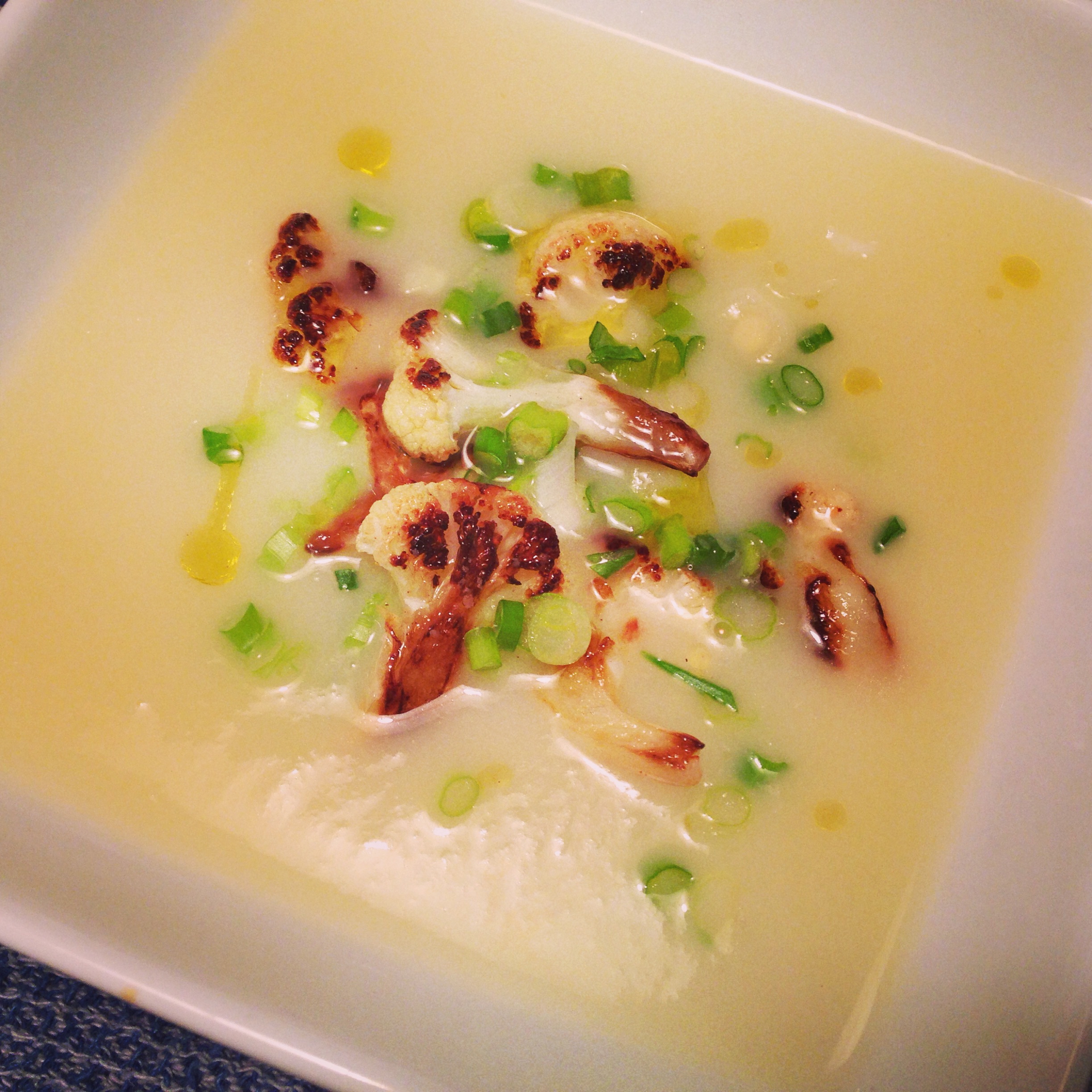
IMG_3086

Creamy Cauliflower Soup (slightly modified from America’s Test Kitchen)

Ingredients:
1 head cauliflower (2 lbs)

1.5 tbl butter, divided use

4 tbl olive oil, divided use

1 leek, white and light green parts only, halved lengthwise, sliced thin, and washed thoroughly

1 small onion, halved and sliced thin

salt and pepper

4.5-5 cups water

1/2 tsp sherry vinegar

3 tbl minced fresh chives

Instructions:

  1. Pull off outer leaves of cauliflower and trim stem.  Using paring knife, cut around core to remove; slice core thin and reserve  Cut heaping 1 cup of 1/2 inch florets from head of cauliflower; set aside.  Cut remaining cauliflower crosswise into 1/2 inch thick slices.
  2. Melt 1 tbl butter with 2 tbl olive oil in large saucepan over medium-low heat.  Add leek, onion, and 1.5 tsp salt; cook, stirring frequently, until leek and onion are softened but not browned, about 7 minutes.
  3. Increase heat to medium high.  Add 4.5 cups water, sliced core, and half of sliced cauliflower and bring to simmer.  Reduce heat to medium-low and simmer gently for 15 minutes.  Add remaining sliced cauliflower, return to simmer, and continue to cook until cauliflower is tender and crumbles easily, about 15-20 minutes longer.
  4. While soup simmers, melt remaining 1/2 tbl butter in 2 tbl of olive oil in 8 inch skillet over medium heat.  Add reserved florets and cook, stirring frequently, until florets are golden brown and slightly caramelized.  Use slotted spoon to transfer the florets to small bowl, toss w/ vinegar, and season w/ salt to taste.
  5. Process soup in blender until smooth, about 45 seconds.  Rinse out saucepan.  Return pureed soup to saucepan and return to simmer over medium heat, adjusting consistently w/ remaining water as needed (soup should have thick, velvety texture but should be thin enough to settle with flat surface after being stirred) and seasoning with salt to taste.  Serve, garnishing individual bowls with browned florets, drizzle of olive oil, and chives and season with pepper to taste.
Packing in the veggies!

When I was studying in the Midwest, I used to crave the foods I had no hope of finding anywhere nearby: jiao zi, luo bo gao, dolsot bibimbap, kimchi, pho, banh xeo, bun rieu, Vietnamese cha gio…the list went on and on.  The homesickness for the diversity of Asian cuisine drove me to the kitchen, where I tried to recreate the tastes from memory and by researching the internet or cookbooks.  Some people received care packages with sweets and treats; my mother shipped me Asian ingredients and sent me back to school with suitcases stuffed with gai lan, which was not readily available where I was living.

I still love buying and preparing Asian vegetables, which shine in the simplest of preparations.  Living in a part of the country with amazing produce also helps.  Inspiration is always around the corner at the next farmer’s market!

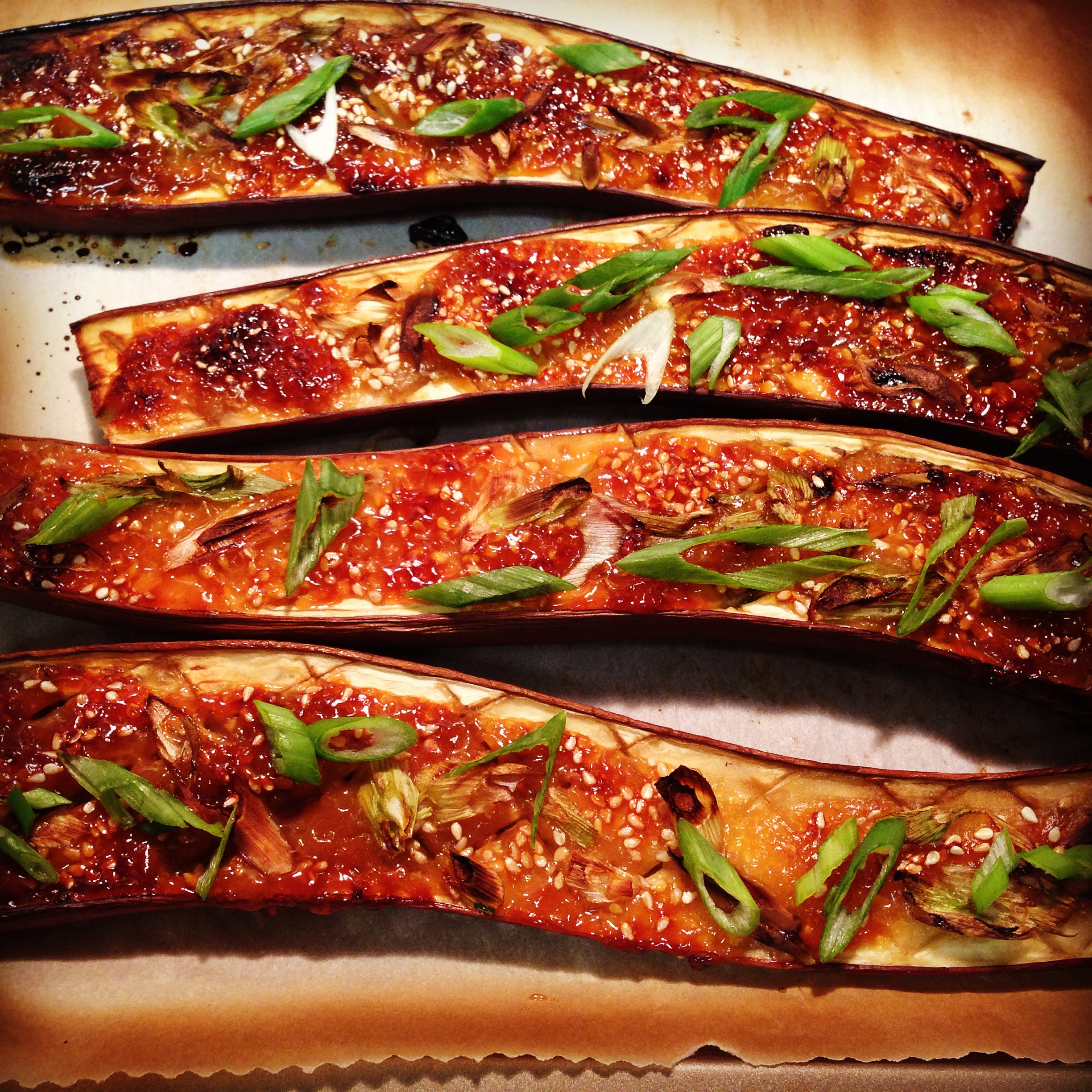
I made this simple miso-glazed broiled eggplant the other night for a light dinner, and couldn’t wait until the next day to have the leftovers for lunch.  Enjoy!

Miso-glazed eggplant
IMG_3046

Ingredients:

  • 1 tbl mirin
  • 1 tbl sake
  • 2 tbl shiro miso
  • 2 tbl sugar
  • 1 tsp grated fresh ginger
  • 2 Japanese eggplants, halved lengthwise
  • 1/2 tsp sesame oil
  • toasted sesame seeds (garnish)
  • green onions sliced on the bias (garnish)

Directions:

  • Preheat the oven to 425°F.
  • Place the mirin, sake, and sugar in a small saucepan and bring to a simmer over medium heat.  Add miso and ginger and stir until smooth.  Reduce heat to low and continue to cook, stirring occasionally, while you prepare the eggplants.
  • Score the cut sides of the eggplant with diagonal cuts.  Brush the cut sides of the eggplants with sesame oil. Put the eggplants cut-side down on a baking sheet and roast  in the oven for about 15-20 minutes until they just start to shrivel. The flesh should be fork tender. Remove from the oven and carefully turn them over.
  • Brush the top of the eggplants with a good layer of the miso sauce (use up all the sauce!) and put them under the broiler until the sauce bubbles up and starts to caramelize, about 1-2 minutes. Remove from heat, garnish with toasted sesame seeds and green onions, and enjoy!

Adding a little spice to the workweek

Between clinical work and finishing up clinical and research work in the evening once I leave the office, it often feels like the days are too short by the time I’ve managed to exercise and do a few chores or run errands.  That said, there is *always* time to be inspired to cook, using new and old recipes.  Even more so when there’s company for dinner!

Tonight, I planned ahead and prepared mae-un dak gui, or Korean chili paste spicy chicken.  I served it with stir-fried green beans, bok choy with ginger, mushrooms sautéed in miso butter, and brown rice.  Total comfort food, and a wonderful way to break in the new grill pan I received for Christmas!

The chicken itself needs to marinate at least 8 hrs (preferably overnight) – it is simple to throw together the night before or early in the morning before work, which is exactly what I did.  With flash-stir-fried veggies, it makes for a quick weeknight dinner!

IMG_3063

Korean Chili Paste Spicy Chicken (mae-un dak gui, adapted from original recipe here):

Ingredients:

1-1.5 lbs boneless, skinless chicken thighs
2 tablespoons Korean chili pepper paste (gochujang)
1 tablespoon soy sauce
1 tablespoon water
3 tablespoons white sugar
1 tablespoons mirin (or sake)
1/4 cup onion, pureed
1 1/2 tablespoons grated or finely minced ginger
1 tablespoons minced garlic
2 scallions, chopped into 1 inch segments, white and green parts separated

Directions:
1. In a large bowl, mix the gochujang, soy sauce, water, white sugar, mirin, onion, ginger and garlic together. Make sure that the sugar is well incorporated in the marinade.
2. Add chicken to the marinade and mix well, making sure each chicken piece is thoroughly coated and has marinade incorporated into all the nooks and crannies. (Wearing disposable kitchen gloves would be helpful for this if you have them.)
3. Cover and marinate for at least 8 hrs or overnight.
4. When ready to cook, heat the grill pan over medium heat. Cook for about 7-9 minutes on one side over lower heat, as the higher sugar content of the marinade lends itself to burning. Do not move for the first few minutes to allow for searing and caramelization of the meat. Add chopped white scallion parts. Turn chicken and cook an additional 7-9 minutes on the other side, adding chopped green scallion parts about 1-2 minutes prior to removing the grill pan from the heat, just long enough to wilt slightly.